
As global temperatures continues to rise, the process of melting glaciers across the world is taking place at an unprecedented rate. These massive reservoirs of ice, which have existed for thousands of years, are now shrinking even more rapidly than ever before.
As snow, ice, and rock accumulate over thousands of years, they form glaciers that act as Earth’s largest freshwater reservoirs. Glaciers not only accumulate valuable ions and minerals over thousands of years but also preserve vast numbers of microbes, including bacteria and viruses.These natural microbial repositories are in their inactive form due to the freezing temperature that keep them locked reducing its effect on humans.
As the Planet Warms, Glaciers Disappear
In recent years rise in global temperature has triggered the rate of melting of these ice giants. As glaciers disappear, sea levels will continue to rise. At the same time, ancient microbes locked in the ice may emerge. Scientist have collected many samples of these molten glacial bodies which has significantly displayed higher concentration of microbes. These researchers still are not able to analyze the characteristics of pathogenic microorganisms in glaciers.
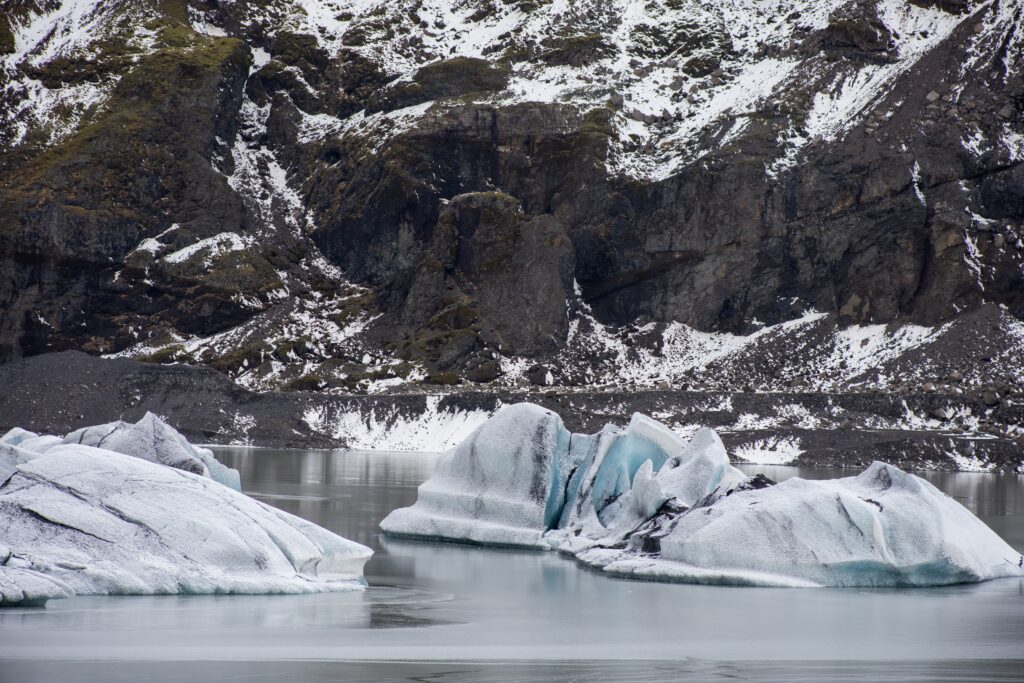
Many analyst claim that a virus or strain of bacteria will emerge from ancient ice which remains untouched till date may challenge the human immune system leading to vast killing of mankind. Scientists believe that microbes found in the upper layers of glaciers are only a few decades old because these layers formed relatively recently. However, microbes trapped deep within glacier cores concern scientists the most, as they may have stayed frozen for hundreds of years.
In this article lets look at the life hidden beneath glaciers. Also we will discuss the challenges that may arise as melting ice exposes these organisms.-
The Hidden World Beneath the Ice
Beneath the ice, glaciers hold countless microbes. Yet these frozen giants hide many other mysteries deep below their surface. Its nearly impossible to predict what’s beneath by just observing those barren lifeless surfaces of glaciers. Scientists have revealed a hidden world under glaciers. It includes subglacial lakes, underground rivers, buried mountains, and unique microbial ecosystems.
Melting glaciers are uncovering the mysterious world preserved beneath their icy surface. Let’s take an insight into this novel ecosystem –
1. Melting Glaciers : Opening a Window into Earth’s Frozen Past
Since glaciers are formed over centuries each layer traps the geological secrets and climatic records of that age. Thus when researchers drill into these ice sheets they have disclosed some facts such as-
a) Tiny air bubbles in each layer reveals CO₂ levels from that era thus describes atmospheric conditions during that period.
b) Tiny particles such as ash and soot preserve clues about the past. They help scientists reconstruct environmental conditions and track major events like eruptions and wildfires.
c) Density of ice in each sheet shows climatic fluctuations over millennia.
These facts helped scientists to predict the age and other changes over the years, for example when ice cores from Antarctica and Greenland were studied they reconstructed the climatic history of over 800,000 years which serves as guide for Earth’s changing climate in today’s world.
2. Melting Glaciers and the Hidden Ecosystems Beneath the Ice –
Under the thick layers of frozen water hides a unknown subglacial world comprising of mountain ranges, valleys, subglacial lakes and subglacial rivers. Let’s dive into some examples of these geological features –
a) The Gamburtsev Mountains in Antarctica, a buried mountain range about the size of Alps is trapped beneath.
b) The Denman Glacier Canyon in East Antarctica which is 3,500 meters (11,500 feet) below sea level, a deepest canyon under layers of ice.
c) Lake Vostok in Antartica, one of the largest subglacial lakes buried under 4km of ice sheets.
The most noteworthy discovery was a 460-km-long (286-mile) subglacial river trapped underneath Antartica’s ice blocks.
As we know now how these mysteries remain concealed beneath these glaciers, but the most fascinating part that astonish world wide scientists is the untouched microscopical universe.
Let’s try to uncover some of their secrets like – How do they thrive in there?., What factors help them sustain? And What if they come to life someday? –
The Hidden Microbial Vault Beneath Melting Glaciers
The glacial sheet formed over the period of time keeps locking the microbes existing in that era, keeping them locked underneath for millennia. These microscopical bodies include ancient bacteria, viruses, frozen algae and fungi. Its predicted that, it may also include some species which are still unknown to mankind.
Its assumed that not all are of these creatures are threats but its said that some could even help us understand its implications for astrobiology. But the intriguing fact is their survival in this extreme conditions and its unspecified risk to mankind. Let’s try to get answers on questions associated with these tiny life forms –
Survival in the Shadows : The Secrets of Lightless Microbes
The white surface of ice reflects light efficiently keeping its lower end sunken in deep darkness, thus if life need to exist down there it has to acquaint life in lightless environment. These tiny species feed on minerals and gases instead of sunlight. Few species are in dormant state waiting for favorable conditions. Researchers when tried to revive them in laboratories they actually came out alive.
So, if the ice is lost over the period of time these organisms will come to life and with further a do will expand their population. This clarifies that the life is awaiting down there waiting to be awaken.
Life on the Edge : What Makes Survival Possible in Extreme Conditions?
The factors like freezing temperatures and lightless life doesn’t stop microbes living in this frozen world. Sediments trapped in glaciers are rich source of iron, sulfur and methane. These chemicals support survival of these tiny creatures by process called chemosynthesis. Chemosynthesis is a process of obtaining energy from chemicals similar to photosynthesis which obtain energy through sunlight. Thus, living in lower temperatures or darkness doesn’t affect their life.
On other hand, some microbes are enclosed in cellular locks which keep them dormant till favorable conditions return. These dormant species possess all cellular chemicals required for growth and development in the inactive form which can alter its chemical conditions as temperature rises and ice melts.
The Microbial Time Capsule: What If Long-Frozen Microbes Revive?
The most concerning stage in melting of ice caps is exposure of hidden microbial world, as their consequences to this modern world is unforeseeable. Scientists understand the role of many existing microbes in today’s environment. These microbes recycle nutrients and interact with plants and animals, helping ecosystems function properly.
The introduction of the ancient miniature bodies could alter the stability of this modern natural world. Their entry could –
– disrupt food chains by competing with existing microbes.
– alter ongoing nutrient cycles modifying composition of soil, oceans, rivers and lakes.
– their effects could be beneficial or harmful or even both.
These concerns lead scientist to the unstoppable efforts to analyze the components trapped in the frozen world. The following discoveries unveil the distress associated with stepping of the tiny species in the current world.
Latest Discoveries That Are Changing What We Know
– Recently scientist have found about 1000 of new species inhabiting in the surface of ice in Tibetan glaciers. To add on, in 2020, scientists found 15,000-year-old viruses in a Tibetan glacier, most of which were previously unknown to science.
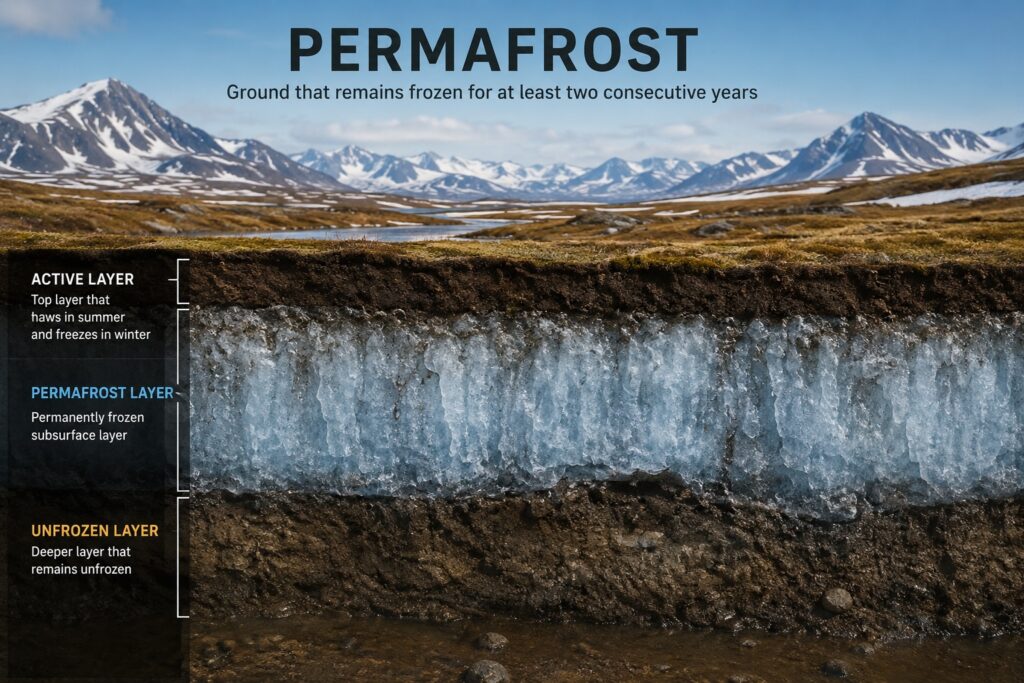
– In 2014, a virus was revived in laboratory which was from 30,000-year-old Siberian permafrost.
– While in 2016, an outbreak of anthrax (a disease caused by the bacterium Bacillus anthracis) in western Siberia due to the rapid melting of ice caps suspending spores of this anthrax in permafrost. It killed thousands of reindeers and affected dozens of people.
Not all impacts were negative instead some emerging microbes added immense scientific value like –
– Researchers collected surface meltwater from eight glaciers in Europe and North America and two sites on the Greenland ice cap. They found tens of thousands of microorganisms in every milliliter of water. Scientists estimate that melting glaciers could release around 650,000 tonnes of carbon annually in the Northern Hemisphere for the next 80 years. Bacteria and algae trapped in the ice are expected to contribute to this release. This helped them foresee the consequences of climate change and global warming and design the timeframe for risk and conservative measures.
– Antibiotics produced by ancient bacteria served best in fighting against antibiotic resistant pathogens, thus producing better life saving drugs.
– These microbes produce enzymes that work well in cold temperatures and may be useful in food production, medicine, and space exploration.
Melting Glaciers: What Comes Next for Earth?
So now comes the questions what’s next?
Due to faster melting of glaciers, scientists are racing against time to categorize and analyze these microscopical bodies into harmful and harmless groups.
Hence, the expansion of research efforts to study emerging microbes or developing early warning system to detect the category is vital before exposure to mankind.
Since investigating these microbes is both difficult and time-consuming, reducing climate change remains our best strategy. Slower glacier melt means fewer ancient organisms entering today’s ecosystems.
The best way to reduce global warming reforestation is one of the best technique. Read more about it – https://ecosciencezone.com/co%e2%82%82-absorbing-trees-for-rapid-reforestation-and-carbon-capture/
This is to note that – “As the ice is melting its evident that the unexplored microscopical world is awaiting for reawakening.”
Leave a Reply